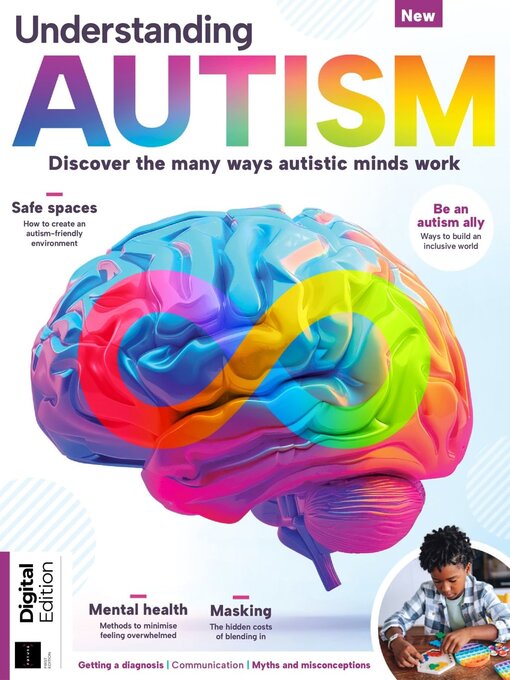
In this bookazine, we will shed light on this neurological difference, explore the varied ways it manifests in different people, and demonstrate the steps we can all take to make autistic lives more comfortable and fulfilling. We’ll also highlight the key strengths of autism, address the misconceptions that continue to affect how it is understood and more.
Welcome
Understanding autism • There are many preconceptions of what autism is – and isn’t – which is influenced in part by inaccurate stereotyping and misunderstanding of the condition. We explain this neurodiversity in more detail
The language of autism • Autistic people often experience differences with communication. Here are some of the challenges that they can face
A world of feeling • For some autistic people, the world is an avalanche, for others it is a desert
Gender differences in autism • How autism can present differently in men and women, and why that matters
Seeking a diagnosis • Do you think you or your child is autistic but aren’t sure what to do? Getting a diagnosis can be an important part of self-identification, but don’t feel intimidated – we’ll walk you through the process
Neurodiversity in children • How does neurodiversity manifest itself in children, and is it something to worry about? We speak to Dr Sinead Doyle to understand what autism and ADHD mean, and how to support children
Taking on the world • Life for autistic children can be tough: it’s their parents’ job to stand up for them
Learning and development • Autistic people may learn and develop new skills in ways that differ from neurotypical individuals, shaped by their unique ways of thinking
A world that works for all • How to change our surroundings so that autistic people can live their lives fully
Navigating social situations • Managing social interactions daily can be stressful and overwhelming, but there are strategies to help you advocate for your needs and communicate effectively
Maintaining relationships • Nurturing connections – whether romantic, familial or platonic – requires time, effort and consistency but trying to navigate relationships as an autistic person can present even further challenges
Putting on the mask • Everyone puts on a façade from time to time yet for socially marginalised groups like the autistic community, ‘masking’ can be a necessary survival mechanism – sometimes to detrimental effects
Time to stim • Stimming is what autistic people do and it’s time the rest of us learned to accept that
Routines and autism • For many autistic people, routines are an important part of everyday life, and it can be challenging when they’re disrupted
Organising life with autism • Understand how executive function can work differently in autistic people and how to put strategies in place to overcome the challenges
Your mental health masterclass • With neurodiversity comes the feeling of being different – and that can lead to struggles with your mental wellbeing
Feeling overwhelmed • We explore why those with autism and other neurodiversities experience overwhelm and how to handle it
Autism in the workplace • The working world is a difficult one for autistic people to enter. We speak to one successful autistic employee for his insights about how to get and keep a job
A helping hand • From speech apps and smartwatches to smart lighting and beyond, technology is increasingly helping autistic people to navigate their lives with confidence
The road to understanding • How we judge people wrongly and how to overcome this bias with respect to autistic people
Myths and misconceptions • There is a lot of misinformation, misrepresentation and stereotypes around autism. Here, we look at...